
Welcome to Koyama Lab
At Koyama Lab, we combine AI, quantum computing, and biology to uncover the hidden rules of living systems. We predict metabolites from bacterial enzymes to illuminate the dark matter of metabolomics, and apply genome language models to surface essential genes and the regulatory logic encoded in DNA. We develop quantum algorithms to simulate metabolic pathways, and pursue a virtual cell model — a generative, counterfactual world model of the cell that predicts how it responds to perturbations. Alongside these, we apply AI to advance our understanding of neuroscience.
Job Opening
We are seeking a highly motivated Interdisciplinary Postdoctoral Researcher at the intersection of AI, Quantum Computing, and Life Sciences. The ideal candidate has a strong background in AI/machine learning or quantum computing algorithms, plus expertise in organic chemistry or biology.
We welcome Ph.D. holders in Computer Science, Bioinformatics, Physics, Mathematics, Chemistry, Biology, or Neuroscience. Please send:
- CV
- List of research activities (publications, achievements, etc.)
- Motivation letter describing your contribution to Bio2Q
- Recommendation letter(s)
News
- 2026/09/15 New preprint: "Graph construction in QUBO-based recursive phylogenetic tree reconstruction" posted on arXiv.
- 2026/09/02 New preprint: "Quantum MeanFlow: single-shot generative sampling on NISQ hardware" posted on arXiv.
- 2025/05/20 Introduction to AI #1 by DailySun New York (in Japanese)
- 2025/05/01 Interview by DailySun New York (in Japanese)
Talks
Projects
Metabolite Predictor
Predicting metabolites from bacterial enzymes to unravel the "dark matter" of metabolites.
Genome Language Model
Leveraging genome language models to surface essential genes, regulatory logic, and the hidden rules of biology. The work probes regulatory mechanisms across genomes and extracts the biological rules encoded in DNA sequence.
Quantum Algorithms for Metabolic Pathways
Developing algorithms to simulate metabolic pathways.
Virtual Cell Model
Building a world model of the cell that learns its internal dynamics and simulates how it evolves over time, rather than treating the cell as static data to embed. The goal is a generative, counterfactual model that can predict cellular responses to perturbations and reveal the underlying principles that govern living systems.
AI in Neuroscience
Applying AI methods to advance understanding of neural systems and brain function.
Publications
Each entry includes a NotebookLM-generated deep dive audio.
Lab Members


At Takeda, I engaged in optimizing lead compounds across numerous drug discovery projects addressing cancer and CNS disorders, focusing on allosteric inhibitors against kinases for higher affinity and specificity. During my tenure at IBM Watson Research Center, I paved the way for genomic medicine by leading scientists across the globe to build Watson for Genomics. In 2020, my paper "Variant Analysis of SARS-CoV-2 Genome" became an early and influential contribution to understanding COVID-19.
- 2014–2024: Research Staff Member, IBM TJ Watson Research Center
- 2007–2014: Tokyo Research Laboratory, IBM Japan
- 2003–2007: Senior Researcher, Takeda Pharmaceutical Company
- 2001–2003: Postdoctoral Fellow, School of Medicine, University of Pennsylvania
- 1999–2001: Oracle Japan
- 1994–1999: Ph.D. Candidate, Physics Dept., Cornell University
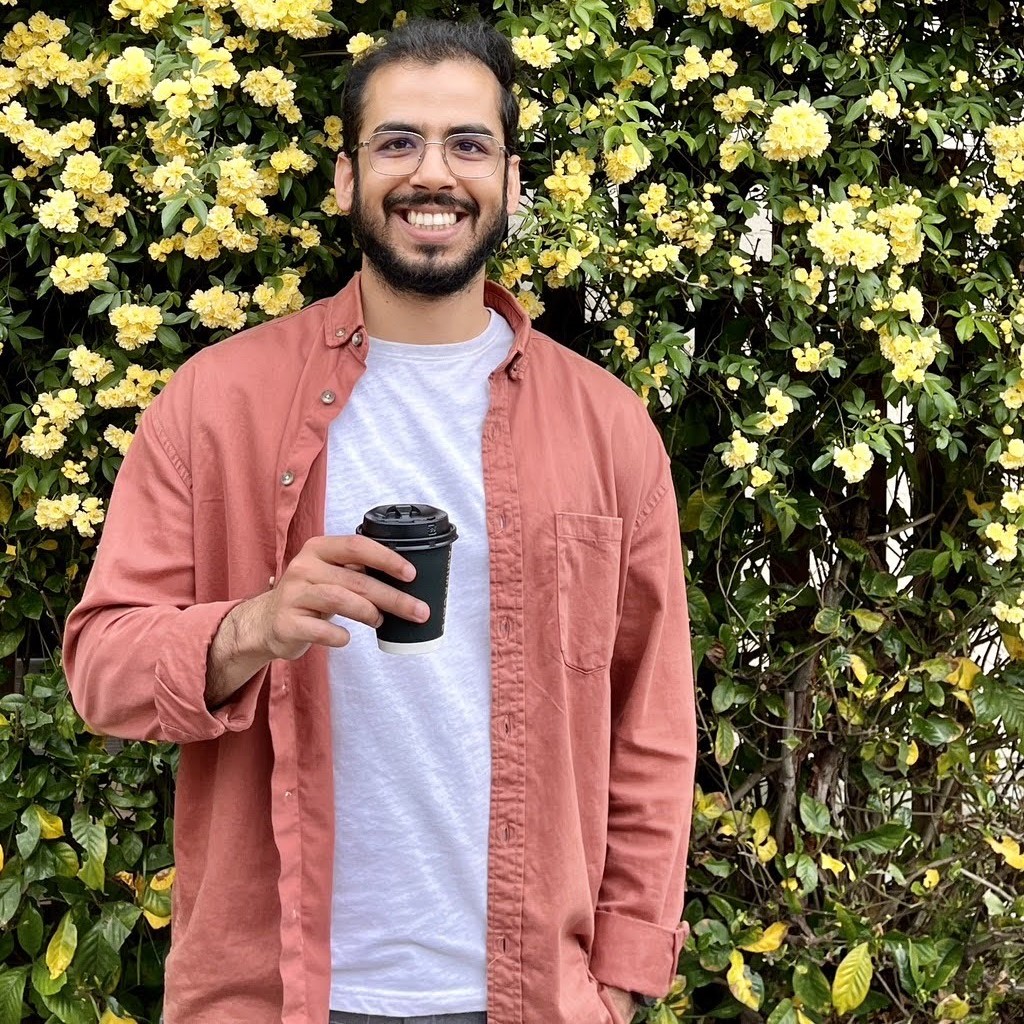
I am a condensed matter physicist with research interests in computational approaches to scientific problems. During my Ph.D., I used machine learning methods to study quantum many-body systems. At Koyama Lab, I develop machine learning and quantum computing techniques for biology. While machine learning is already making huge strides in various fields, when combined with quantum computing it has the potential to revolutionize scientific computing. We work with experts across disciplines to bridge these disparate research fields.
- 2021–2024: Ph.D. Candidate, Dept. of Physics, Kyoto University
- 2019–2021: M.S. Candidate, Dept. of Physics, Kyoto University
- 2014–2018: B.S. Applied Physics, Delhi Technological University, India
Contact
Shinjuku-ku, Tokyo 160-8582, Japan